Actividades, recursos, DIY y más
Ideas de juegos, actividades DIY, imprimibles gratuitos, lecturas recomendadas, juegos de mesa, recursos en inglés, vídeos y pequepoemas para hacer con niños.
Imprimibles gratuitos
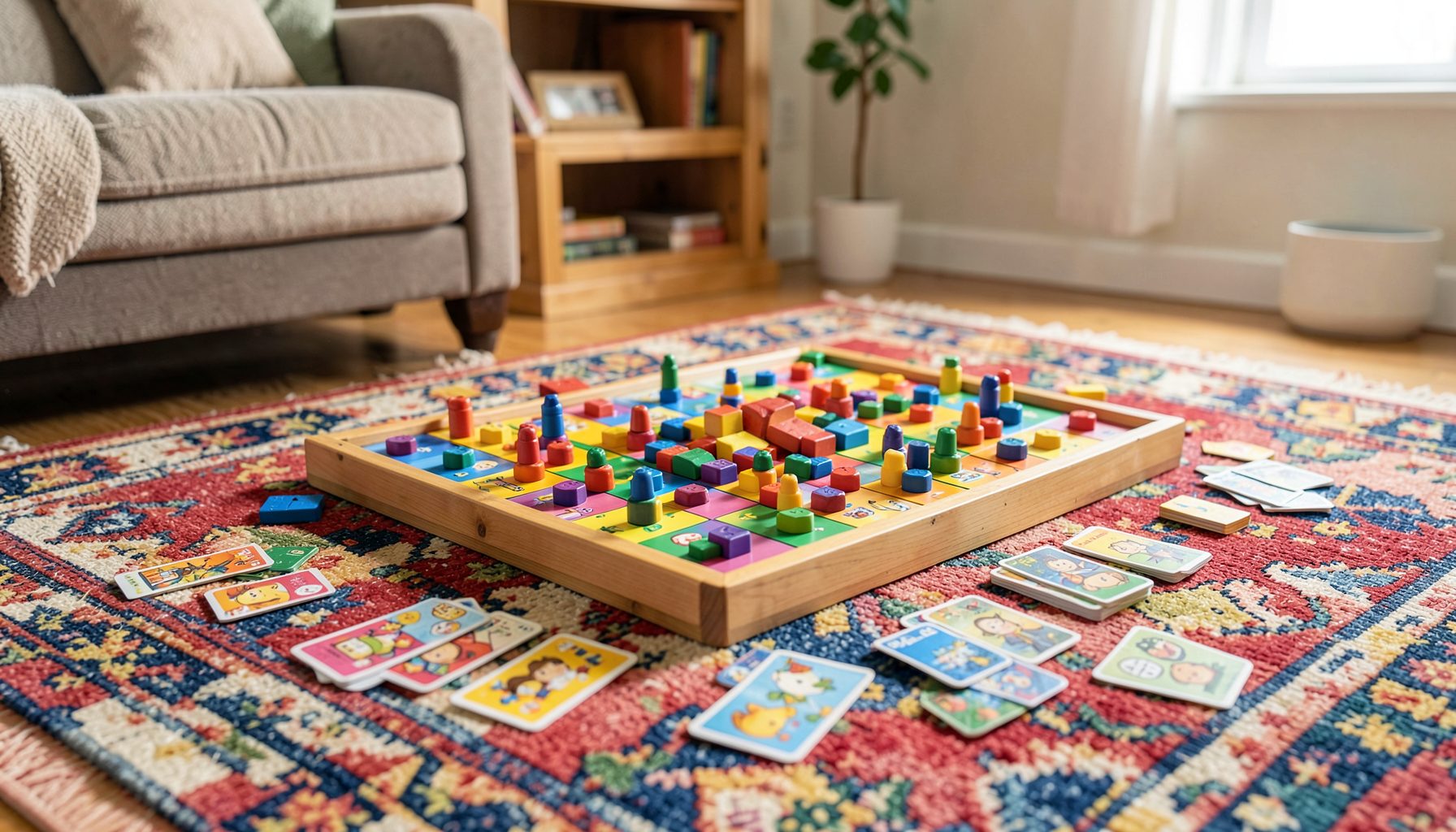
Descarga materiales listos para usar en casa o en el aula: juegos de movimiento para quemar energía, láminas de busca y encuentra, fichas de lectoescritura y propuestas de motricidad. Todos los imprimibles son gratuitos y pensados para acompañar el juego libre.
Bandeja de experimentos con agua y objetos flotantes
Una bandeja puede convertirse en un pequeño laboratorio de agua, llenas y movimiento. Con_NETO? objetos household, los niños observan qué permanece en la superficie, qué se hunde, qué cambia de dirección y por qué dos materiales parecidos se comportan de manera distinta. La actividad ofrece una pregunta sencilla y abierta: ¿qué ocurre cuando un objeto encuentra el agua?
El valor de la propuesta está en acompañar la curiosidad sin dirigir cada paso. Colocar, retirar, comparar y volver a probar forma parte del juego. La bandeja deja ver razonamientos que a menudo se pierden cuando la actividad se reduce a encontrar una respuesta. Materiales sencillos, un poco de agua y tiempo para jugar bastan para abrir una conversación sobre densidad, aire, forma y_texture? Need Spanish "textura".
Elegir la bandeja y formular una pregunta
La base debe ser amplia, estable y fácil de limpiar. Una bandeja de horno, una fuente rectangular o una bandeja de plástico refractario pueden funcionar bien. También sirve una caja poco profunda con bordes suficientes para evitar derrames. Si el recipiente tiene asas, desodorante? no. Conviene comprobar que no tenga grietas,臭味? no. and that the child cannot tip it easily. For outdoor use, it can be placed on a towel or inside a shallow tub to collect water.
Antes de llenar la bandeja, ayuda pensar qué quieren descubrir los niños. Pueden comparar si flotan objetos de madera, plástico, metal, corcho o espuma; observar qué succiona el agua;plore cómo se comporta una vela; or comprobar qué objetos se desplazan según su forma. Una pregunta concreta ordena la exploración: “¿La madera siempre flota?”, “¿El papel se hunde si está mojado?” o “¿Por qué una kosher? bottle floats?” Better avoid "kosher". "envase de plástico vacío".
Las preguntas no necesitan una única solución. El child can predict, try and compare. If the idea also includes art and architecture, the reading la superficie como invitación puede stimulate a visual conversation about borders, layers and appearances. The same tray can then be seen as a landscape, a harbor or a stage where every object occupies a place.
Preparar el espacio y los materiales
Reúne una selección variada antes de começar. Some useful options are corcho, wooden spoons, small plastic containers, bottle caps, buttons, clean sponges, clothespins, paper scraps, foam pieces, ping-pong balls, stones, keys, coins, leaves and pieces of fabric. It is preferable to use objects that are clean, without sharp edges and large enough not to be swallowed. Small loose items should be kept out of reach during the experiment.
Coloca los objetos en una bandeja o basket to the side and fill the main tray with a thin layer of water. That way children can choose freely, without everything getting soaked at once. Have ready a small container for wet materials, a towel, a cloth or sponge for cleaning, and a dry space to place the objects after use. An apron or old shirt helps preserve the enthusiasm for the activity.
Supervise the water without interrupting play. Keep the depth low, especially with babies or children who tend to put objects in their mouths. Avoid leaving water in the tray unattended, and empty it immediately after the session. Do not use fragile glass, electrical items, candles or substances that could contaminate the water. The goal is to create a safe environment for concentration and discovery, with the adult nearby but without taking control.
Ofrecer objetos para comparar
Begin with a few clearly different materials and let the child decide what to try first. A wooden spoon, a metal spoon, a plastic cap and a piece of sponge offer an immediate contrast. After a brief observation, they can be placed in the water and recovered. The sequence gives everyone time to anticipate results and notice differences in weight, color, texture and resistance.
Material properties become more interesting when several objects are tested together. A plastic bottle with its lid on behaves differently from the same bottle open. A cork sinks when waterlogged but floats while dry. A coin can remain at the bottom while a broad plastic lid stays on the surface. These changes invite explanations rather than simple labels of “floats” and “sinks”.
The shape of an object can be altered during the experiment. A strip of aluminum foil can be rolled into a ball and then unfolded into a flat shape. The flat sheet may float while the ball sinks, revealing how volume and distribution affect buoyancy. Paper can be folded, crumpled or attached around a small object. These transformations turn the tray into a place for testing ideas.
Leave room for free play as well. Children might build a raft, race leaves, collect objects in a corner or imagine that the tray is a sea. Adults can introduce comparisons without interrupting the story: “This one stayed sideways”, “the sponge filled with water” or “the closed container did not sink”. Precise observation becomes the shared language of the game.
Observar, conversar y registrar
During the first minutes, observe what the child does and which details attract attention. Some children sort by material; others choose objects according to color, sound or movement. Each starting point is useful. Adult participation can focus on noticing: “I see bubbles around the edge”, “the wood is softer than the plastic” or “the object looks heavier but floats”. Such descriptions expand vocabulary and make the experience accessible even before complex scientific explanations appear.
A simple record can preserve the discoveries without converting the activity into a test to pass. On paper or cardboard, draw the tray and let the child place a symbol next to each object that floats or sinks. Add notes about wet materials, objects that turned over or those that moved across the water. Photographs and short videos also work well, as they allow the group to revisit changes and discuss what happened later.
When an expectation is disproved, treat it as valuable information. A child may believe that all metal sinks and then see that a metal spoon remains at the surface. An explanation can be offered gently: “Perhaps the spoon has air around it, or the water pushes it upward”. It is unnecessary to deliver a complete theory. The essential thing is to connect the prediction, the observation and the new question that emerges from the surprise.
Ampliar el juego más allá de la bandeja
The same materials can be transferred to a sink, a bathtub or a small plastic tub outdoors. In a park or garden, leaves, pinecones, stones and branches offer new textures and shapes. With the appropriate precautions, the water can be reused to water plants, provided no harmful products or dirty objects have been added. Outdoor play also allows movement, while the tray continues to provide a controlled space for close observation.
Water experiments can also connect with family projects involving plants. For families who want to continue exploring growth and care at home, the guide huerto urbano en macetas ofrece ideas for small gardens where children can observe changes over time. Roots, leaves, irrigation and soil become another way of understanding the physical world.
Once the tray has been emptied, use the remaining objects for a sorting game, a collage, a small boat or a story. Recycled bottles and lids can be combined with sticks, cardboard and leaves to create figures or vehicles. This extension shows that the experiment has not ended when the water disappears. Its ideas can travel from science to construction, artistic expression and shared invention.
The tray becomes especially memorable when children are allowed to repeat the experience. Materials can be changed, the water level altered or the same object tested under different conditions. Over time, they may begin making their own hypotheses and noticing that some answers depend on variables that are not always visible.
What should remain is the pleasure of discovering relationships through play, without the pressure to produce a perfect result. The lasting memory is of water, curious hands and a process in which every observation opened a new possibility.
Nuestras lecturas
Una selección de libros infantiles que nos han enamorado, organizados por temáticas y edades. Cuentos para despertar la curiosidad, trabajar las emociones y compartir momentos de lectura en familia.
Juegos de mesa
Descubre juegos de mesa recomendados por franjas de edad: desde los 2-3 años hasta los 6 años. Juegos que fomentan la cooperación, la lógica y la diversión compartida.
Pequepoemas
Poesía breve para leer con los niños: versos que juegan con las palabras, despiertan la sensibilidad y acercan el lenguaje poético a los más pequeños de forma natural y divertida.
Recursos en inglés y otros
Materiales educativos en inglés para introducir el idioma de forma lúdica: canciones, tarjetas de vocabulario, cuentos y actividades que acompañan el aprendizaje sin prisas.
Vídeos DIY
Tutoriales en vídeo con ideas paso a paso: manualidades, experimentos sencillos y propuestas de juego que puedes replicar fácilmente en casa con los niños.